
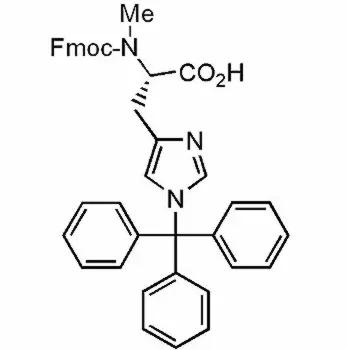
Fmoc-N-Me-His(Trt)-OH
Price range: $480.00 through $936.00
| Catalog Number | FH2161 |
| Chemical Structure |  |
| CAS Number | 1217840-61-3 |
| Molecular Weight | 633.73 g/mole |
| Formula | C41H35N3O4 |
Description
Fmoc-N-Me-His(Trt)-OH (CAS 1217840-61-3): Advanced SPPS Reagent & Technical Guide
In the fields of custom peptide synthesis, medicinal chemistry, and structural biology, controlling peptide backbone conformation and enzymatic susceptibility is a central design challenge. Utilizing specialized Fmoc N-methylated amino acids has emerged as one of the most effective strategies for overcoming hydrophobic aggregation and suppressing proteolytic cleavage. Among these specialized reagents, Fmoc-N-Me-His(Trt)-OH (CAS 1217840-61-3) serves as a critical building block for incorporating backbone-modified histidine residues during Solid-Phase Peptide Synthesis (SPPS).
Histidine is historically recognized as one of the most problematic amino acid residues to couple due to side-chain reactivity and high susceptibility to racemization. For synthesis teams preparing to execute complex peptide assemblies, sourcing analytical-grade Fmoc-N-Me-His(Trt)-OH from amino asylum ensures high coupling efficiency, structural integrity, and reproducible yields.
What is Fmoc-N-Me-His(Trt)-OH (Fmoc-N-methyl-L-histidine(Trt))?
Fmoc-N-Me-His(Trt)-OH, chemically designated as Fmoc-N-alpha-methyl-N-tau-trityl-L-histidine, is an $N^\alpha$-methylated, orthogonally protected derivative of $L$-histidine. The molecule is specifically engineered for use in standard Fmoc/tBu SPPS protocols, offering precise control over both backbone modifications and side-chain protection.
The insertion of an $N^\alpha$-methyl group alters the peptide backbone by replacing the amide hydrogen ($\text{-NH-}$) with a methyl group ($\text{-N(CH}_3\text{)-}$). This substitution eliminates a hydrogen bond donor site, disrupting secondary $\beta$-sheet folding during chain elongation.
                  [ Fmoc-N-Me-His(Trt)-OH Molecular Architecture ]
                                         │
        ┌────────────────────────────────┼────────────────────────────────┐
        ▼                                ▼                                ▼
[ Base-Labile Fmoc ]            [ N-Methyl Backbone ]           [ Acid-Labile Trt ]
 (Alpha-Amino Shielding)         (Hydrogen Donor Removal)        (Imidazole Side-Chain)
        │                                │                                │
        ▼                                ▼                                ▼
  Piperidine Deprotection         Disrupts Beta-Sheets           Prevents Racemization
  During Cycle Steps              & Enhances Permeability        & Side-Reactions
Chemical Identity & Molecular Architecture of CAS 1217840-61-3
The chemical parameters of CAS 1217840-61-3 make it an essential reagent for specialized N-methyl histidine building blocks:
Chemical Specifications Reference:
• IUPAC Name: Fmoc-N-alpha-methyl-N-tau-trityl-L-histidine
• CAS Registry Number: 1217840-61-3
• Abbreviated Nomenclature: Fmoc-MeHis(Trt)-OH / Fmoc-N-methyl-L-histidine(Trt)
• Molecular Formula: C41H35N3O4
• Molecular Weight: 633.74 g/mol
• Protect Group Matrix: N-alpha (Fmoc, base-labile), Imidazole N-tau (Trityl/Trt, acid-labile)
• Physical State: Off-white to white crystalline powder
• Storage Parameters: Refrigerated (-20°C to 4°C), desiccated, protected from light
The Role of Dual Protection: Fmoc Group and Trityl (Trt) Side-Chain Shielding
Base-Labile N-alpha Protection Kinetics
The 9-Fluorenylmethyloxycarbonyl (Fmoc) group shields the $N^\alpha$-amino nitrogen during storage and coupling steps. Deprotection occurs smoothly via $E1cB$ elimination using weak organic bases such as $20\%$ piperidine in $N,N$-dimethylformamide (DMF), releasing carbon dioxide and dibenzofulvene adducts without disturbing acid-sensitive linkages.
Acid-Labile Imidazole Protection and Racemization Suppression
Histidine’s imidazole ring contains nucleophilic nitrogens ($\pi$ and $\tau$) that readily undergo side reactions, such as premature activation or base-catalyzed racemization via $\text{C}^\alpha$ deprotonation. The bulky Trityl (Trt) group on the $N^\tau$ nitrogen provides steric hindrance, drastically lowering the electron density of the imidazole ring and effectively suppressing racemization during carbodiimide or uronium-based coupling activation.
| Property / Parameter | Unprotected Histidine | Standard Fmoc-His(Trt)-OH | Fmoc-N-Me-His(Trt)-OH |
| CAS Registry Number | 71-00-1 | 109425-51-6 | 1217840-61-3 |
| Backbone Hydrogen Donor | Present ($\text{-NH-}$) | Present ($\text{-NH-}$) | Absent ($\text{-N(CH}_3\text{)-}$) |
| Racemization Risk | High | Low (Trt-Shielded) | Minimal (Trt + Steric Methyl) |
| Enzymatic Degradation | High | Standard | Ultra-Low Resistance |
| Peptide Aggregation | High ($\beta$-sheet prone) | Moderate | Suppressed (Chain Disrupter) |
Applications of Fmoc N-Methylated Amino Acids in Solid-Phase Peptide Synthesis (SPPS)
                            [ SPPS Assembly Challenge ]
                                         │
        ┌────────────────────────────────┴────────────────────────────────┐
        ▼                                                                 ▼
[ Unmodified Amide Backbones ]                                [ N-Methylated Insertion ]
        │                                                                 │
        ▼                                                                 ▼
[ Interchain Hydrogen Bonding ]                               [ Steric Backbone Disruption ]
        │                                                                 │
        ▼                                                                 ▼
[ Beta-Sheet Aggregation / Resin Shrinkage ]                  [ Solvated Chain / High Coupling Yields ]
Overcoming Peptide Aggregation and Beta-Sheet Formation
A frequent failure mode in long-chain SPPS is interchain hydrogen bonding between amide protons ($\text{-NH-}$) and carbonyl oxygens ($\text{-C=O}$), leading to hydrophobic $\beta$-sheet self-assembly on the resin support. This aggregation prevents reagents from reaching the terminal amine, causing incomplete coupling sequences.
Incorporating Fmoc N-methylated amino acids replaces critical hydrogen bond donors, breaking up secondary structural folding. Using Fmoc-MeHis(Trt)-OH within hydrophobic or aggregation-prone sequences maintains resin swelling and preserves high coupling efficiency.
Backbone Methylation Mechanics and Conformational Restriction
N-methylation alters the cis/trans isomerism of the preceding peptide bond:
-
Conformational Rigidity: Limits the torsional angles ($\phi, \psi$) accessible to the peptide backbone, stabilizing specific turn or helical bioactive conformations.
-
Pharmacokinetic Enhancement: $N$-methylated residues increase lipophilicity and membrane permeability, while protecting adjacent peptide bonds against proteolysis by trypsin, chymotrypsin, and carboxypeptidases.
Advanced Synthetic Strategies with Protected Histidine Derivatives SPPS
Coupling Reaction Protocols and Hindered Amide Bond Formation
Coupling onto an $N$-methylated terminal amine (such as reacting a incoming amino acid with the exposed $N^\alpha$-methyl amine of Fmoc-N-methyl-L-histidine(Trt)) presents steric hindrance. Standard coupling conditions are often insufficient for quantitative conversion.
Optimal Activation Protocols for Hindered N-Me Coupling:
1. Reagents: HATU / HOAt or COMU in the presence of DIPEA.
2. Alternative System: DIC / Oxyma Pure for reduced racemization.
3. Extended Reaction Time: 2 x 60 min double coupling at room temperature or controlled microwave heating (50°C).
4. Solvents: NMP/DMF mixtures to maximize resin swelling.
Preventing Histidine Racemization During Activation
Histidine derivatives are prone to loss of chiral integrity during carboxyl activation. Using protected histidine derivatives SPPS reagents featuring $N^\tau$-Trt protection minimizes oxazolone formation, keeping racemization levels below $1\%$ when activated with phosphonium or uronium coupling salts.
Comparative Analysis & Synergistic Chemical Catalog Integration
Comparing N-Methyl Histidine Building Blocks with Standard Amino Acid Reagents
Using N-methyl histidine building blocks like CAS 1217840-61-3 allows synthetic chemists to fine-tune neuropeptide stability, receptor selectivity, and metabolic half-life relative to non-methylated native sequences.
                      [ Reagent Sourcing to Finished Research ]
                                         │
     ┌───────────────────────────────────┼───────────────────────────────────┐
     ▼                                   ▼                                   ▼
[ Chemical Building Blocks ]    [ Bioactive Neuropeptides ]        [ Research Compounds ]
 • Fmoc-N-Me-His(Trt)-OH         • N-Acetyl-Semax Spray              • Buy Noopept
 • Custom SPPS Resins            • N-Acetyl-Selank Spray             • NAD+ Spray
                                 • PT-141 Spray / MT-II Spray        • glutathione spray
                                                                     • BPC-157 Spray
From Synthesis Reagents to Finished Bioactive Compounds
Laboratory workflows span the spectrum from early-stage chemical synthesis using custom building blocks like Fmoc-N-Me-His(Trt)-OH to evaluating fully formulated reference products:
-
Nootropic & Cognitive Research: Laboratories utilizing custom synthesis for peptide design frequently cross-reference data with established central modulators such as Buy Noopept.
-
Cellular Bioenergetics & Redox: Downstream cellular studies often combine peptide assays with metabolic catalysts like NAD+ Spray and master antioxidants like glutathione spray.
-
Tissue Repair & Melanocortin Pathways: Advanced biological modeling pairs synthetic peptides with regenerative sequences like BPC-157 Spray, alongside melanocortin receptor agonists such as PT-141 Spray and MT-II Spray.
-
Stabilized Neuropeptide Formulations: Chemical backbone modifications evaluated via SPPS closely mirror the enzymatic stability strategies utilized in advanced research sprays, such as N-Acetyl-Semax Spray and N-Acetyl-Selank Spray.
Sourcing High-Purity Reagents for Synthesis at Amino Asylum
When executing solid-phase peptide synthesis, reagent purity directly impacts crude assembly quality and downstream purification workloads. Sourcing chemical building blocks from Amino Asylum ensures reliable raw material performance.
Analytical Purity: HPLC, NMR, and Mass Spectrometry Verification
Every batch of Fmoc-N-Me-His(Trt)-OH (CAS 1217840-61-3) undergoes comprehensive analytical quality verification:
-
High-Performance Liquid Chromatography (HPLC): Confirms chemical purity ($\ge 98.0\%$).
-
Proton Nuclear Magnetic Resonance ($^1\text{H-NMR}$): Verifies correct structural integration of Fmoc, $N^\alpha$-methyl, and $N^\tau$-Trt protecting groups without unassigned isomer peaks.
-
Mass Spectrometry (MS): Confirms precise molecular mass ($633.74\text{ g/mol}$).
Quality Notice: Laboratories sourcing chemical reagents through amino asylum receive high-purity, batch-verified synthesis building blocks backed by analytical documentation.
Quality Control Standards for Peptide Synthesis Building Blocks
-
Controlled Enantiomeric Purity: Guarantees minimal $D$-histidine content ($< 0.5\%$).
-
Residual Solvent Control: Vacuum-dried to eliminate trace volatile organic contaminants that can interfere with coupling stoichiometry.
Frequently Asked Questions (FAQ)
What Is the Exact Chemical Name for Fmoc-N-alpha-methyl-N-tau-trityl-L-histidine?
The full IUPAC designation is Fmoc-N-alpha-methyl-N-tau-trityl-L-histidine, commonly abbreviated as Fmoc-N-Me-His(Trt)-OH or Fmoc-MeHis(Trt)-OH under CAS 1217840-61-3.
How Does Fmoc-MeHis(Trt)-OH Prevent Side-Reactions During TFA Cleavage?
The $N^\tau$-Trityl group is acid-labile and cleaves smoothly during final trifluoroacetic acid (TFA) treatment. Including scavengers (such as triisopropylsilane/TIS and water) traps the resulting trityl carbocations, preventing re-alkylation of the imidazole ring or tryptophan/cysteine residues.
What Are the Recommended Storage Conditions for CAS 1217840-61-3 Reagents?
Store dry powders at $-20^\circ\text{C}$ in tightly sealed desiccated containers, protected from ambient moisture and light to prevent slow hydrolysis of the Fmoc protecting group.
Final Verdict: Sourcing High-Purity Fmoc-N-Me-His(Trt)-OH for Research
Achieving clean peptide assembly, overcoming structural aggregation, and introducing backbone stability requires high-grade amino acid building blocks. Fmoc-N-Me-His(Trt)-OH (CAS 1217840-61-3) provides the chemical control necessary for integrating protected $N$-methylated histidine residues into complex SPPS sequences.
When sourcing specialized Fmoc N-methylated amino acids or protected histidine derivatives SPPS reagents for your laboratory, amino asylum delivers batch-verified purity, analytical documentation, and reliable fulfillment to support your custom synthesis protocols.
Additional information
| weight | 500mg, 1g |
|---|
Related products
-
- AMINOS
Relax Blend AM
- Log in to view price and purchase
-
- AMINOS
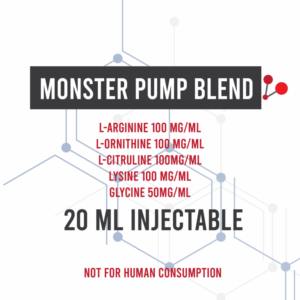
MONSTER PUMP BLEND 20ML
- Log in to view price and purchase
-
- AMINOS
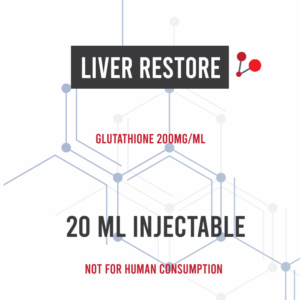
LIVER RESTORE 20ML
- Log in to view price and purchase
Reviews
There are no reviews yet.