
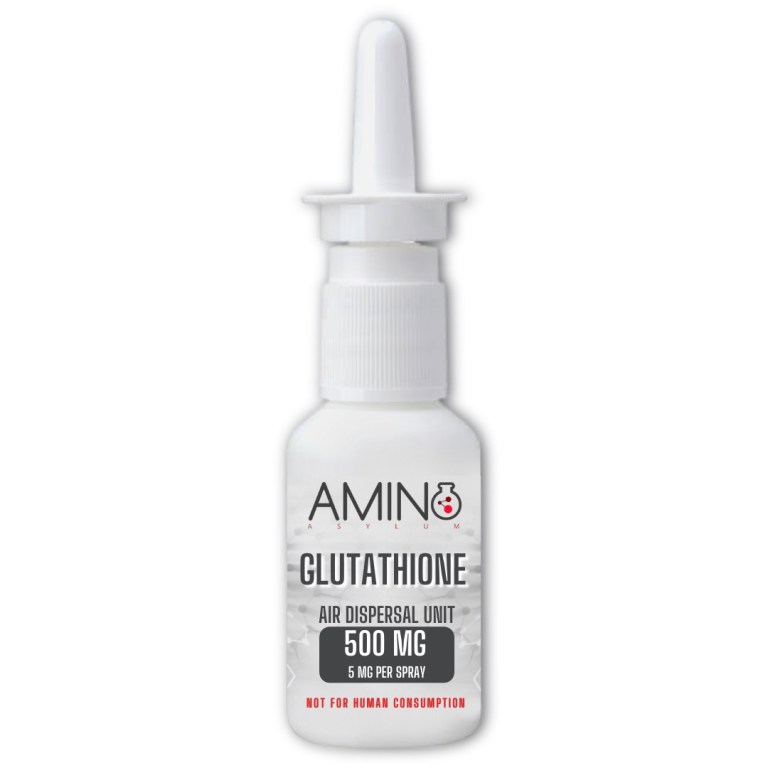
Glutathione Spray
$44.99
A convenient antioxidant spray designed to support natural antioxidant defenses, cellular wellness, and healthy-looking skin. Easy to add to your daily wellness routine.
Description
Glutathione Spray: Advanced Antioxidant Research & Intranasal Guide
In cellular biology, toxicology, and neuroprotective research, Reduced L-Glutathione ($\text{GSH}$) is universally recognized as the endogenous “master antioxidant.” Responsible for maintaining cellular redox homeostasis, neutralizing reactive oxygen species ($\text{ROS}$), and facilitating xenobiotic detoxification pathways, adequate intracellular glutathione concentrations are vital to cell survival.
As laboratory protocols investigate modalities to circumvent gastrointestinal breakdown, Glutathione Spray has emerged as a cornerstone reference tool. Utilizing an atomized delivery vehicle, Glutathione nasal Spray provides researchers with a non-invasive administration route engineered for rapid mucosal uptake and direct central nervous system access.
What is Glutathione Spray (Reduced Glutathione)?
Glutathione is a tripeptide composed of three amino acids: $L$-glutamate, $L$-cysteine, and glycine ($\gamma\text{-L-glutamyl-L-cysteinylglycine}$). Unlike standard peptide bonds, the linkage between glutamate and cysteine occurs via the $\gamma$-carboxyl group, protecting the molecule from degradation by conventional intracellular peptidases.
While conventional oral dosing leads to rapid hydrolysis within the gastrointestinal tract, utilizing an intranasal glutathione spray allows the active tripeptide to migrate across the vascularized nasal mucosa, bypassing intestinal $\gamma$-glutamyltransferase enzymes and hepatic first-pass metabolism.
                    [ Intranasal Glutathione Spray ]
                                   │
              (Trans-Mucosal Migration / Nasal Epithelium)
                                   │
        ┌──────────────────────────┴──────────────────────────┐
        ▼                                                     ▼
[ Olfactory / Trigeminal Pathway ]                   [ Systemic Micro-Capillaries ]
        │                                                     │
        ▼                                                     ▼
[ Direct CNS Access / Hypothalamus ]               [ Peripheral Tissue Bio-Distribution ]
        │                                                     │
        └──────────────────────────┬──────────────────────────┘
                                   ▼
              [ ROS Scavenging & Mitochondrial Protection ]
Molecular Structure: The Tripeptide Master Antioxidant
The primary bioactivity of Reduced Glutathione stems from its active thiol ($-\text{SH}$) sulfhydryl group on the cysteine residue. This structure serves as a sacrificial electron donor, neutralizing free radicals and converting active $\text{GSH}$ into its oxidized dimer form, Glutathione Disulfide ($\text{GSSG}$).
Chemical Specifications Reference:
• Chemical Name: $\gamma$-L-Glutamyl-L-cysteinylglycine (Reduced Form)
• Molecular Formula: C10H17N3O6S
• Molecular Weight: 307.32 g/mol
• CAS Number: 70-18-8
• Active Functional Group: Thiol (-SH) moiety
• Storage Parameters: Refrigerated (2°C - 8°C), protected from air and light
Comparing Oral Administration vs. Intranasal Glutathione Spray
| Parameter | Oral Glutathione Capsules | Intranasal Glutathione Spray |
| Gastrointestinal Hydrolysis | Severe (Breakdown via $\gamma$-glutamyltransferase) | Bypassed Completely |
| First-Pass Hepatic Metabolism | High | Bypassed Completely |
| Blood-Brain Barrier Crossing | Minimal / Insignificant | Facilitated via Olfactory/Trigeminal Channels |
| Peak Concentration ($T_{\max}$) | Delayed ($1 – 2 \text{ hours}$) | Rapid ($15 – 30 \text{ minutes}$) |
| Dose Efficiency | Low Bioavailability | High Systemic & Central Yield |
Mucosal Permeability and Direct CNS Uptake Pathways
The cribriform plate and olfactory epithelium present a unique structural window. Utilizing an intranasal glutathione spray enables partial transport along the olfactory nerve pathways directly into the cerebrospinal fluid ($\text{CSF}$), circumventing tight junctions of the blood-brain barrier ($\text{BBB}$).
Bypassing Gastrointestinal Hydrolysis and First-Pass Metabolism
When administered orally, pancreatic proteases and intestinal enzymes degrade tripeptides into individual amino acid constituents. Delivering pre-formulated Glutathione nasal Spray preserves the intact $\gamma$-glutamyl linkage necessary for specific intracellular transporter recognition.
Scientific Formulation Dynamics: Intranasal vs. Liposomal Glutathione Spray
Evaluating delivery matrix dynamics is essential when designing controlled laboratory trials.
Bioavailability Profiles of Liposomal Formulations
In oral delivery studies, researchers frequently examine liposomal glutathione spray or oral suspensions. Liposomal entrapment wraps the tripeptide in a phospholipid bilayer sphere, protecting it from stomach acids and enhancing intestinal passive absorption.
However, while a liposomal glutathione spray improves gastrointestinal transit relative to unencapsulated powders, intranasal delivery matrices achieve direct mucosal absorption without requiring phospholipid encapsulation, eliminating additional variable lipid carrier interactions in delicate cellular assays.
Reduced L-Glutathione Stability in Aqueous Spray Matrices
Reduced Glutathione is prone to spontaneous oxidation when exposed to dissolved oxygen, forming $\text{GSSG}$. To maintain a high $\text{GSH}:\text{GSSG}$ ratio ($> 95\%$ reduced form) in aqueous spray formulations:
-
Solutions are buffered within a slightly acidic to neutral $\text{pH}$ range ($6.0 – 6.8$).
-
Storage containers feature airtight, opaque spray actuators to prevent UV-induced autoxidation and gas exchange.
Key Research Applications and Cellular Defense Mechanisms
Reactive Oxygen Species (ROS) Scavenging and Mitochondrial Protection
Mitochondrial oxidative phosphorylation generates superoxide anions ($\text{O}_2^{\bullet-}$) and hydrogen peroxide ($\text{H}_2\text{O}_2$). Glutathione Peroxidase ($\text{GPx}$) uses reduced $\text{GSH}$ to reduce $\text{H}_2\text{O}_2$ into harmless water:
Regenerating active $\text{GSH}$ from $\text{GSSG}$ relies on the enzyme Glutathione Reductase ($\text{GR}$) and $\text{NADPH}$ cofactors, forming a vital defense loop against mitochondrial membrane lipid peroxidation.
                           [ Reactive Oxygen Species (ROS) ]
                                          │
                                          ▼
[ Reduced Glutathione (GSH) ] ──( GPx )──► [ H2O2 Neutralization ] ──► [ H2O ]
            ▲                                     │
            │                                     ▼
            └──────────────( GR + NADPH )───── [ GSSG ]
Neuroinflammation Mitigation and Microglial Regulation
Overactive microglia release inflammatory cytokines ($\text{TNF}-\alpha$, $\text{IL}-1\beta$) and nitric oxide ($\text{NO}$), inducing neuroinflammatory stress. By restoring intracellular $\text{GSH}$ pools via Glutathione nasal Spray, researchers observe downregulation of Nuclear Factor Kappa B ($\text{NF}-\kappa\text{B}$) signaling cascades, protecting surrounding neuronal architecture.
Comparative Analysis & Synergistic Research Stacks
Complex neuro-chemical and metabolic protocols often pair antioxidant compounds with complementary cognitive, peptide, and cellular energy modulators.
                      [ Multi-Pathway Cellular Protocol ]
                                       │
     ┌─────────────────────────────────┼─────────────────────────────────┐
     ▼                                 ▼                                 ▼
[ Antioxidant / Redox ]      [ Bioenergetic / Energy ]      [ Cognitive / Neuropeptides ]
  • Glutathione Spray          • NAD+ Spray                    • N-Acetyl-Semax Spray
                               • Buy Noopept                   • N-Acetyl-Selank Spray
                                                               • PT-141 Spray
Bioenergetic Protocols: Combining Glutathione Spray with NAD+ Spray
Oxidative stress directly depletes intracellular $\text{NAD}^+$ pools by overactivating $\text{PARP}$ repair enzymes. Co-administering cellular antioxidants with metabolic coenzymes—such as pairing Glutathione Spray with NAD+ Spray—allows laboratories to analyze simultaneous mitochondrial $\text{ATP}$ synthesis and free radical clearance in real time.
Multi-Pathway Stacks: Integrating Buy Noopept, PT-141 Spray, N-Acetyl-Semax Spray, and N-Acetyl-Selank Spray
Multi-target research models frequently evaluate systemic and central pathways concurrently:
-
Cognitive & Receptor Modulation: Pairing antioxidant sprays with central dipeptides—such as when research teams choose to Buy Noopept—provides a robust baseline for evaluating $\text{AMPA}$ receptor activity alongside oxidative stress reduction.
-
Neuropeptide & Neurotrophic Pathways: Integrating central neuropeptides like N-Acetyl-Semax Spray and anxiolytic modulators such as N-Acetyl-Selank Spray enables researchers to monitor $\text{BDNF/NGF}$ upregulation and GABAergic cross-talk under protected redox conditions.
-
Autonomic Receptor Signaling: Evaluating central melanocortin activation alongside redox pathways is streamlined by incorporating targeted agonists like PT-141 Spray.
Sourcing Premium Research Compounds at Amino Asylum
Because autoxidation and contamination compromise empirical testing, sourcing reference materials from a validated supplier is fundamental to laboratory data integrity.
Certificate of Analysis (COA) & High-Performance Liquid Chromatography (HPLC)
High-grade research chemicals demand rigorous quality verification. At Amino Asylum, every product batch undergoes strict analytical testing:
-
High-Performance Liquid Chromatography (HPLC): Confirms structural purity ($\ge 98\%$) and verifies the absence of oxidized $\text{GSSG}$ accumulation.
-
Mass Spectrometry (MS): Validates precise molecular weight ($307.32 \text{ g/mol}$).
Quality Standard: Scientific institutions sourcing through amino asylum receive high-purity, batch-verified research reagents backed by comprehensive analytical testing and expedited shipping.
Storage, Oxidation Control, and Laboratory Handling Guidelines
-
Temperature Control: Keep liquid spray containers refrigerated ($2^\circ\text{C} – 8^\circ\text{C}$) to minimize hydrolytic cleavage and autoxidation.
-
Seal Integrity: Ensure spray actuators are tightly capped after each laboratory sampling session to prevent prolonged air exposure.
-
Light Protection: Store inside opaque outer packaging to guard against photo-oxidation.
Frequently Asked Questions (FAQ)
What Is the Difference Between Glutathione Nasal Spray and Oral Glutathione Supplements?
Glutathione nasal Spray delivers the active tripeptide directly across vascularized nasal mucosal membranes into systemic circulation and $\text{CSF}$ channels. Oral glutathione undergoes heavy gastrointestinal degradation via $\gamma$-glutamyltransferase enzymes, yielding minimal systemic bioavailability.
How Should Intranasal Glutathione Spray Be Stored to Prevent Oxidation?
Store upright in a refrigerated climate ($2^\circ\text{C} – 8^\circ\text{C}$), shielded from direct sunlight and ambient air exposure, to preserve the reduced ($\text{GSH}$) state.
What Is the Standard Concentration in Metered Glutathione Spray Solutions?
Standard research spray bottles are engineered to dispense calibrated micro-volumes (e.g., $100 \text{ \mu L}$ per actuation delivering a precise milligram concentration of active Reduced Glutathione).
Final Verdict: Sourcing High-Purity Glutathione Spray for Research
Investigating cellular redox regulation, mitochondrial preservation, and neuroprotective pathways requires pure, stable reference compounds. Utilizing Glutathione Spray provides an effective, non-invasive methodology for delivering intact Reduced L-Glutathione across vascularized mucosal barriers in laboratory models.
Whether comparing intranasal administration against a liposomal glutathione spray or evaluating multi-pathway neuropeptide stacks, selecting a verified vendor is critical. Rely on amino asylum for analytical-grade research chemicals, verified purity, and consistent fulfillment across all your scientific protocols.
Related products
-
- SPRAYS
MT-II Spray
- Log in to view price and purchase
-
- SPRAYS
N-Acetyl-Selank Spray
- Log in to view price and purchase
-
- SPRAYS
NAD+ Spray
- Log in to view price and purchase
Reviews
There are no reviews yet.